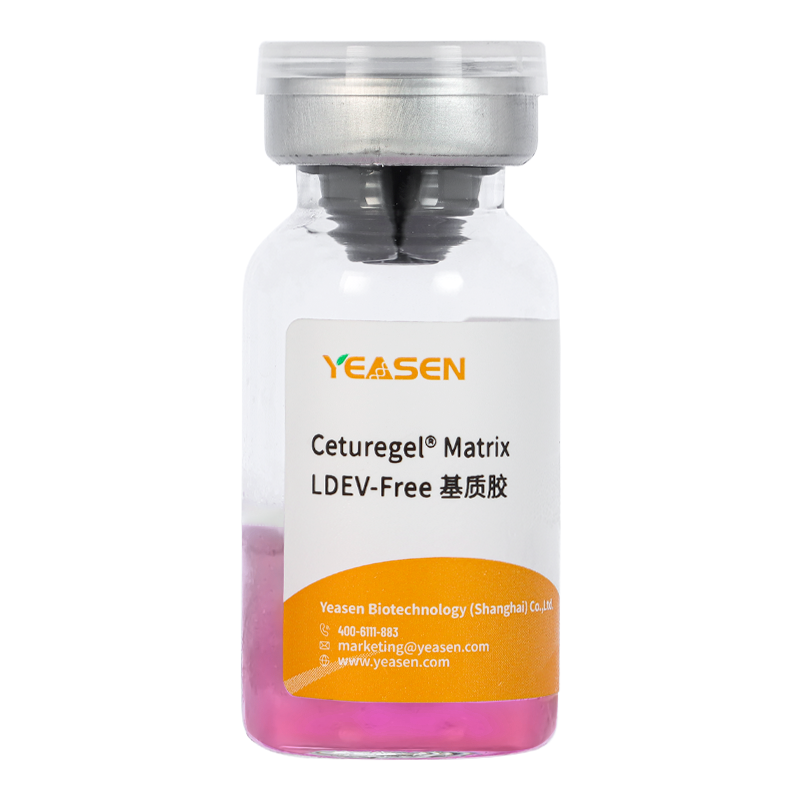
Ceturegel® Matrix LDEV-Free基质胶
勾选需要的规格可一次提交;也可以逐个询价。货号会一并带入询价单。
Q:基质胶使用浓度?
A:凝胶浓度:在需要基质胶凝胶的实验中,工作浓度需大于3 mg/mL
包被浓度:包被实验时基质胶无需成胶,因此包被浓度应小于凝胶浓度(即3mg/mL),工作浓度需要根据具体的细胞类型进行预实验测试。对于侵袭实验,建议浓度设置在1-2mg/mL之间,再根据特定的实验体系进行优化
血管生成实验浓度:请务必使用大于10 mg/mL的基质胶产品
体内皮下注射实验浓度:由于是体内实验,为了避免成胶不完全,建议终浓度在4 mg/mL以上
3D培养:建议终浓度在4 mg/mL以上
Q:40183应用方向?
A:适应于2D和3D培养、侵袭和迁移实验,也可以用于体内成瘤实验
Q:40183与40184的区别?
A:40184是无酚红的,40183是含酚红的
Q:基质胶的保存温度,可以放-80保存吗?
A:可以的,-20和-80均是可以的
Q:基质胶中LDEV是什么?
A:乳酸脱氢酶增高病毒(LDEV)会感染小鼠巨噬细胞,并导致实验室小鼠群体的持续性感染。LDEV是一类RNA病毒,会改变小鼠的体内生理活动,是源自可移植肿瘤细胞系的生物试材的常见污染物。
已发表文献
[1] Jia, D., Wang, Q., Qi, Y., Jiang, Y., He, J., Lin, Y., Sun, Y., & Wang, L. (2024). Microbial metabolite enhances immunotherapy efficacy by modulating T cell stemness in pan-cancer. Cell, *187*(7), 1651-1665.e21. doi: 10.1016/j.cell.2024.02.022 (IF:64.5)
[2] Ren, W., Zheng, P., Zhou, Z., et al. (2025). Immunoglobulin-directed phase separation for cell-specific modulation of receptor signaling. Journal of the American Chemical Society, *147*(38), 34620-34631. doi: 10.1021/jacs.5c09699 (IF:15.7)
[3] Zhao, T., Jin, K., Wang, X. et al. GPAT4 sustains endoplasmic reticulum homeostasis in endocardial cells and safeguards heart development. Nat Commun 16, 3345 (2025).. doi: 10.1038/s41467-025-58722-5 (IF:15.7)
[4] Zhao, S., Liu, X., Luo, R., et al. (2025). USP38 functions as an oncoprotein by downregulating the p53 pathway through deubiquitination and stabilization of MDM2. Cell Death & Differentiation, *32*, 1128-1141. doi: 10.1038/s41418-025-01462-2 (IF:15.4)
[5] Zhao, K., Sun, T., Sun, Q., Chen, Z., Wang, T., Yang, J., Li, L., Zhu, Y., Liu, X., Yang, D., Lin, B., & Lu, N. (2025). Nerve growth factor signaling promotes nuclear translocation of TRAF4 to enhance tumor stemness and metastatic dormancy via c-Jun-mediated IL-8 autocrine. Advanced Science, *12*, 2414437. doi: 10.1002/advs.202414437 (IF:15.1)
[6] Hu, L., Ma, X., Cai, X., et al. (2026). The mitochondrial translocation of phosphorylated EZH2 promotes PARP inhibitor resistance in BRCA1-deficient epithelial ovarian cancer. Cell Discovery, *12*, 17. doi: 10.1038/s41421-026-00880-x (IF:13)
[7] Wu, C., Sun, X., Lu, Y., et al. (2025). Cancer-associated fibroblast promotes tamoxifen resistance in estrogen receptor positive breast cancer via exosomal LncRNA PRKCQ-AS1/miR-200a-3p/MKP1 axis-mediated apoptosis suppression. Journal of Experimental & Clinical Cancer Research, *44*, 274. doi: 10.1186/s13046-025-03529-x (IF:12.8)
[8] Nan, Y., Zhu, M., Wang, Q., Du, X., Xu, C., & Wan, Y. (2025). Nanobody-engineered bispecific IL-18 mimetics drive antitumor immunity by engaging CD8+ T cell and evading IL-18BP in preclinical models. Molecular Therapy, *33*(10), 4988–5002. doi: 10.1016/j.ymthe.2025.07.004 (IF:12.1)
[9] Xiao, F., Zhu, H., Xiong, Y., Guo, Y., Zhang, Z., Zeng, J., Xiao, Y., Liao, B., Shang, X., Zhao, S., Hu, G., Huang, K., & Guo, H. (2024). Positive feedback loop of c-myc/XTP6/NDH2/NF-κB to promote malignant progression in glioblastoma. Journal of Experimental & Clinical Cancer Research, *43*(1), 187. doi: 10.1186/s13046-024-03109-5 (IF:11.4)
[10] Zhou, X., Wang, J., Lu, M., Fang, L., Zhao, J., & Li, D. (2025). Leucine-rich repeat-containing 56 promotes breast cancer progression via modulation of the RhoA/ROCKs signaling axis. Molecular Biomedicine, *6*(1), 31. doi: 10.1186/s43556-025-00271-w (IF:10.1)
[11] Dong, D., Wang, Z., Liu, M., et al. (2025). Combined SNPs sequencing and allele specific proteomics capture reveal functional causality underpinning the 2p25 prostate cancer susceptibility locus. Nature Communications, *16*, 8950. doi: 10.1038/s41467-025-64005-w (IF:10)
[12] Yang, N., & Li, X. (2022). Epigallocatechin gallate relieves asthmatic symptoms in mice by suppressing HIF-1α/VEGFA-mediated M2 skewing of macrophages. Biochemical Pharmacology, *202*, 115112. doi: 10.1016/j.bcp.2022.115112 (IF:5.858)
 支原体喷雾剂(即用型)
40605ES
 基质胶 Ceturegel® Matrix,Phenol Red-F...
40192ES
 Ceturegel®基质胶(GFR/不含酚红/不含LDEV)(同康宁...
40186ES
 MycAway™支原体去除试剂(1000×)
40607ES
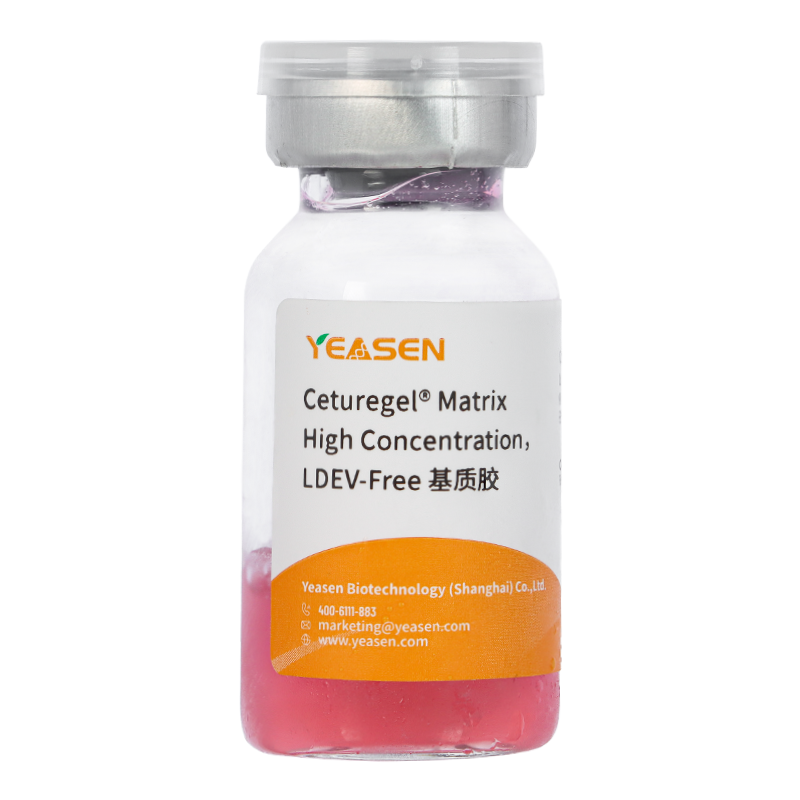 Ceturegel™ Matrix基质胶 高浓度基质胶 无LDEV基...
40187ES
 MycAway™ Plus-Color一步法快速支原体检测试剂盒
40612ES
 Lysozyme溶菌酶 碱性溶菌酶 细菌破壁酶
10402ES
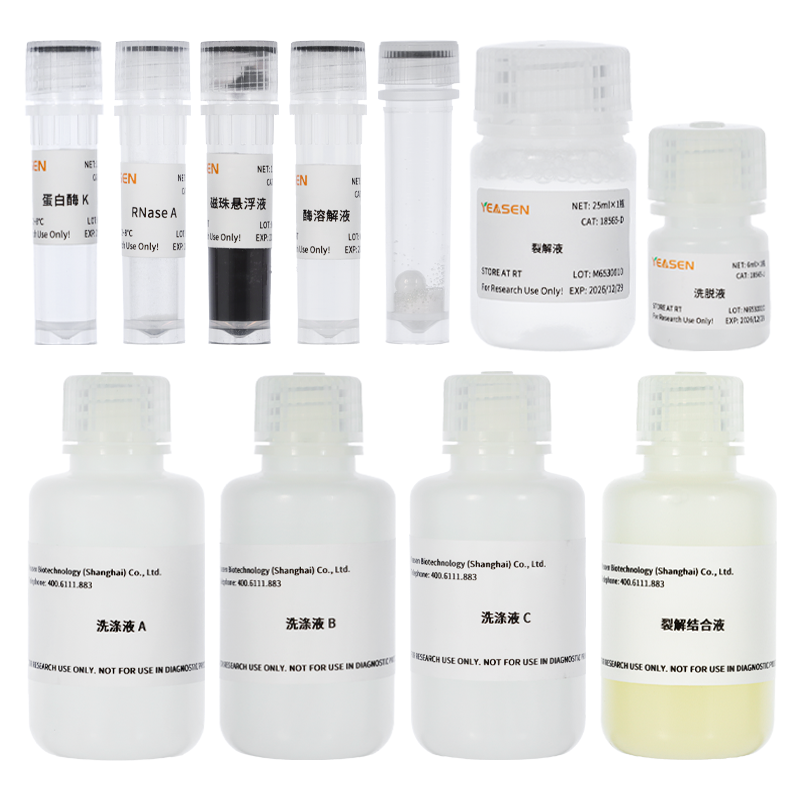 磁珠法细菌/真菌DNA提取试剂盒 MolPure® Magnetic...
18565ES


